Concrete Yugoslavia
Yugoslavia in concrete — gates, monuments, towers and holiday hotels built to outlast the federation that raised them, and now outliving it empty. Thirteen stops, six countries, one long drive.
- Route
- Belgrade → Krk
- Stops
- 13
- Suggested
- 15 days
- Driving
- ~2,300 km
When · May to October. The Igman road and the Plješevica plateau are miserable or shut in winter, and half of this route only pays you back in long light.
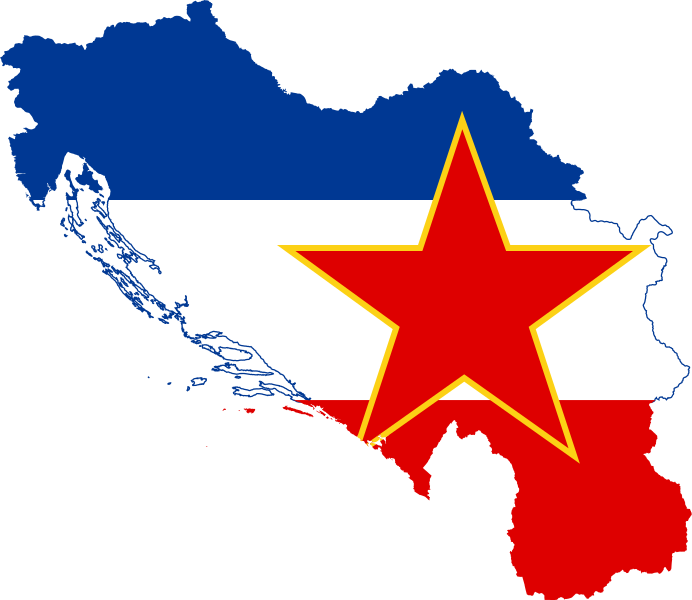
These are the buildings a country made when it believed in the future hard enough to pour it in concrete. Gates, monuments, towers, holiday hotels, an air base inside a mountain — built at a scale that only makes sense if you assume the people coming after you will keep the lights on.
They didn’t. The federation dissolved, the money left, and the concrete stayed exactly where it was: too heavy to remove, too strange to love, too honest to fake. I keep coming back to these places because they don’t pretend. They tell you what was believed, and then they tell you what happened to the belief.
Why this order
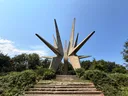
It starts in Belgrade, because Belgrade is where the idea is loudest. Two city gates — one famous and half-empty, one anonymous and completely full — then south out of the city to a television tower that was knocked flat and rebuilt by public subscription, and a hilltop where five concrete wings stand in a beech wood with nobody looking at them. Four buildings inside eighty kilometres, and between them they cover the whole emotional range of this thing: pride, use, loss, recovery.
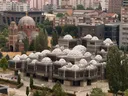
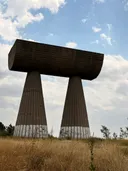
Then it goes to Kosovo the long way round, through North Macedonia, for reasons that have nothing to do with distance and everything to do with which line on the map counts as a border. Pristina gives you the most argued-about building in the Balkans. Mitrovica gives you two concrete pillars holding up a mine cart, built to say that two peoples carry the same weight — standing above a town a river now divides, with peacekeepers still on the bridge. That stop is the hinge of the route. Everything before it is architecture. Everything after it is architecture you read differently.
The back half is coast and mountains: a terraced resort going to salt above the Adriatic, a hotel left in the pines after an Olympics, a circular sanatorium built for sick children and hidden in the trees, and on the edge of Split a holiday hotel buried so deep in twenty years of aerosol that the paint is the first thing you see and the shape only the second — and it’s the shape that tells you what year it was drawn. Then it goes underground, inside a mountain on the Croatian border that was hollowed out to hide fighter jets from a nuclear war that never arrived. Two hours north, on a forested hill, is the story all of it was built on: a monument to the uprising of 1941 that the federation told itself it was born from, stripped of its steel and standing in the fog.
And then it ends on an island, in a resort where the same state sold roulette to Western high rollers for hard currency. Take the last three in that order: the bunker, the monument and the casino — the next war, the last one, and the money. A country builds all three when it is frightened, proud and hopeful at the same time — and on Krk it is the hopeful one that is still standing, wrecked, with the sea in front of it.
Thirteen buildings, six countries, and one federation that isn’t on any of the signs any more.
How to use this
Every stop here is somewhere you can stand in front of. That’s the point: this is a drive past these buildings, not a way into them. Half of them are landmarks whose coordinates are already on Wikipedia — the value isn’t the pin, it’s the order, the road between them, and knowing which border to use.
The map below has each stop, where to leave the car, and what you can see from where you leave it. The drive above is broken into legs with honest times: honest meaning what it actually takes, not what a routing engine promises before it has met a Bosnian mountain road or a queue at Preševo.
And read “Before you go” properly. Two of those cards are the difference between a good trip and being turned around at a border.
- 01
Across Belgrade. Do the eastern one in the morning with the sun behind you and save the western gate for the evening — it's the one that earns a sunset.
0.5 h · 14 km
- 02
Out of the city and up through beech forest. The tower gives you no reveal at all until the trees stop.
0.5 h · 22 km
- 03
Small roads through farmland. Both hills in one morning is easy — and it's the last easy day for a while.
1 h · 35 km
- 04
6 h · 430 km
- 05
1 h · 40 km
- 06
2 h · 110 km
- 07
8 h · 460 km
- 08
6 h · 300 km
- 09
3.5 h · 200 km
- 10
1 h · 60 km
- 11
4 h · 290 km
- 12
Members
2 h · 95 km
- 13
Members
2.5 h · 180 km
Kosovo — go in and out the same way
Serbia does not treat the Kosovo boundary as an international border. The rule that catches people out: if you entered Kosovo from anywhere other than Serbia, Serbia can refuse to let you cross directly from Kosovo into Serbia — as far as they're concerned you'd be entering the country at a place that isn't a place. This whole route is built around it. You leave Serbia into North Macedonia, enter Kosovo from there, and come back out the same way, so the question never gets asked. The one crossing to avoid on this trip is Kosovo → Serbia. Kosovo → Montenegro or Albania is fine on the same logic if you change the plan. And a Kosovo stamp on its own doesn't bar you from Serbia later — it's the direction you cross that matters, not the ink. This is a live political situation: check the current position before you drive it.
North Mitrovica — check before you go in
Mitrovica is a disputed town and you feel it before anyone tells you. The Ibar splits it, the bridge in the middle has peacekeeping forces on it and doesn't carry cars, and there are political posters up around the place. It's also completely lived in — people shop, take kids to school, sit outside with a coffee — and that was my day there. But this is the one stop on the route where it can change without notice: barricades, protests and armed stand-offs have flared here repeatedly, and 2023 was bad. Check the news and your own government's travel advice the morning you go, not the week before — this isn't a situation you read about once and file away. Don't take a car on Serbian plates into the north. Don't photograph the checkpoints, the bridge or KFOR positions — the monument yes, the soldiers no. And if something is obviously happening, turn around. The concrete will keep.
Željava — stay on the hard surface
The base was mined and partly blown up when it was abandoned, and the plateau around it has a demining history. The runway and the main tunnels are well used and the cleared routes are obvious, but the standing advice for Plješevica hasn't changed: stay on concrete and asphalt, keep out of the long grass and the treeline, and don't go crawling into side galleries or rubble. It also sits directly on the Croatia–Bosnia border, which is unmarked on the ground — it's entirely possible to walk into another country here, and to be noticed doing it.
Paperwork for the car
Kosovo sits outside the Green Card system for most European policies — you buy third-party cover at the border in cash euros, which takes ten minutes and costs a few tens. Check your own policy first; some now include it. If the car is rented, get written cross-border permission before you leave the desk: plenty of Balkan rental agreements exclude Kosovo outright and some exclude Albania too, and discovering that at Hani i Elezit is a bad afternoon. This route crosses seven frontiers — keep registration, insurance and licence somewhere you can reach without unpacking the boot.
These are drive-pasts
Every stop here is somewhere you can stand, look and photograph from public ground. This is a route past these buildings, not a way into them. Some are private, some are structurally unsound, some are people's homes, and one is a former military installation. What the map gives you is where to be and what you can see from there. What you do after that is yours, and so is the responsibility.
The whole guide — 13 places, unlocked.
- All 13 stops on one interactive map, in the order I drove them
- Where each building is — exact where it's already public, otherwise a ~1 km area
- Where to leave the car, and what you can see from there
- Every new route added to the journal, included
One membership unlocks every guide and every location.
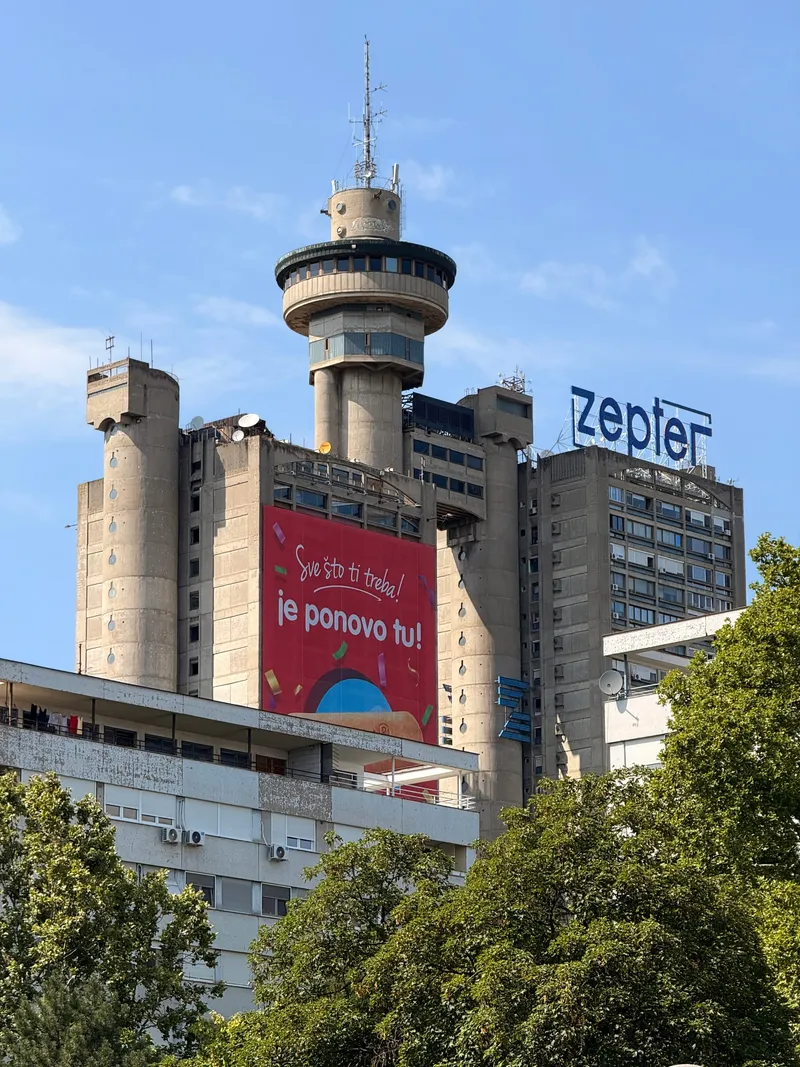
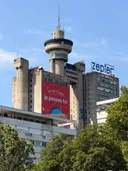
The Western City Gate
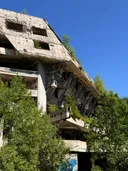
Belgrade's brutalist twin towers bridged by a sky-walk and crowned with a dead revolving restaurant — a city's idea of the future, half-occupied.
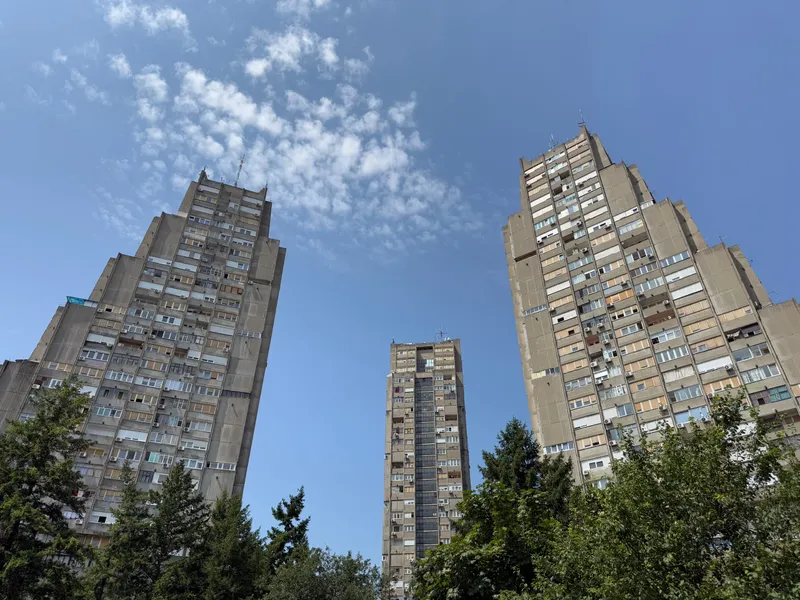
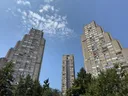
The Eastern City Gate
Three concrete towers standing on a hill above Belgrade's eastern approach — the gate nobody photographs, and the one people actually still live in.
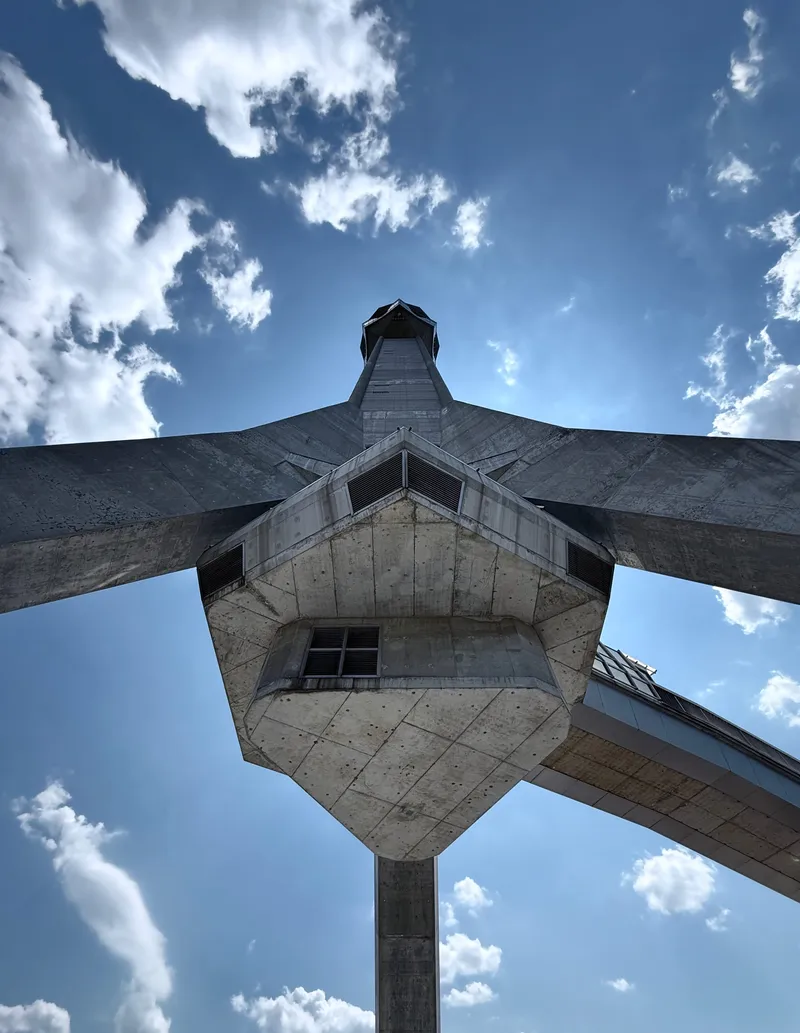
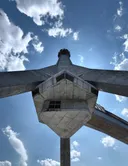
Avala
The tallest thing in the Balkans, standing on three splayed concrete legs above Belgrade — flattened in 1999, then rebuilt by a country that passed the hat.
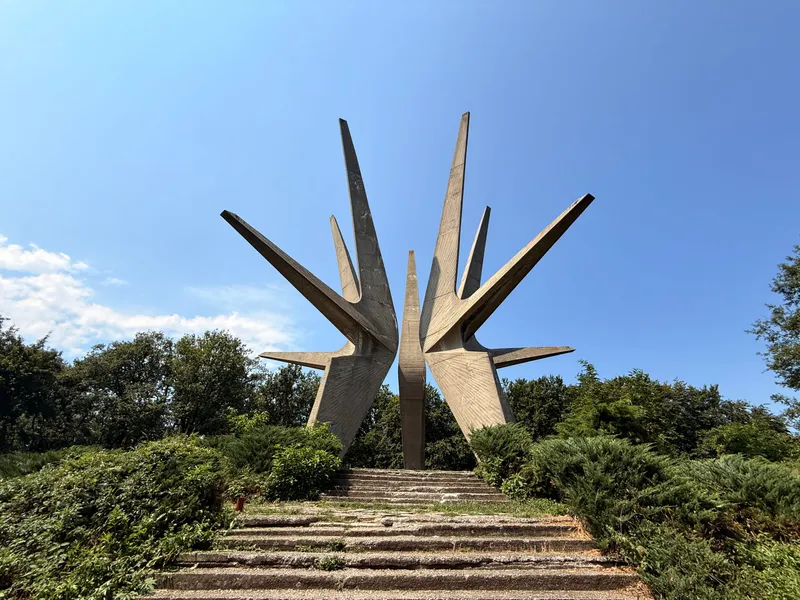
Kosmaj
Five concrete wings thrown thirty metres into the air on a Serbian hilltop — a star pulled apart and left standing in the beech woods.
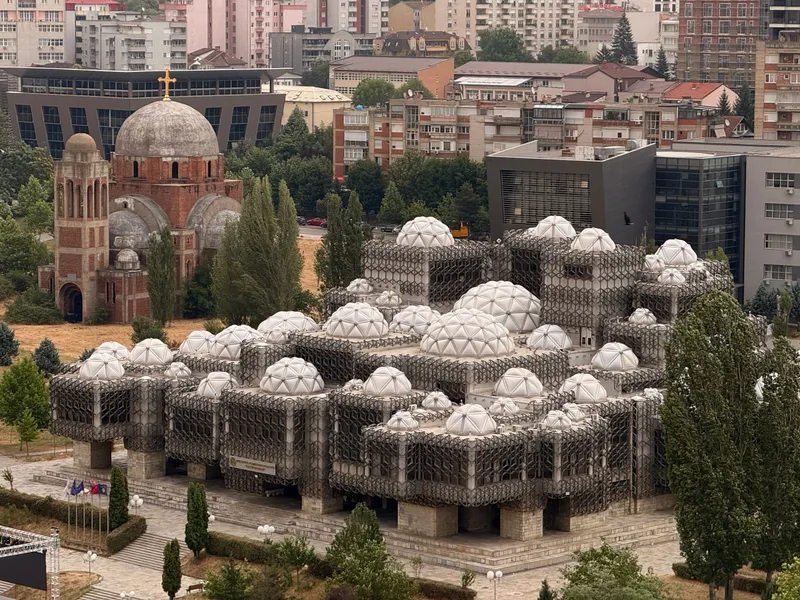
A Building Wearing Armour
Ninety-nine domes and a cage of metal lattice in Pristina — the National Library of Kosovo, one of the most argued-about buildings anywhere.
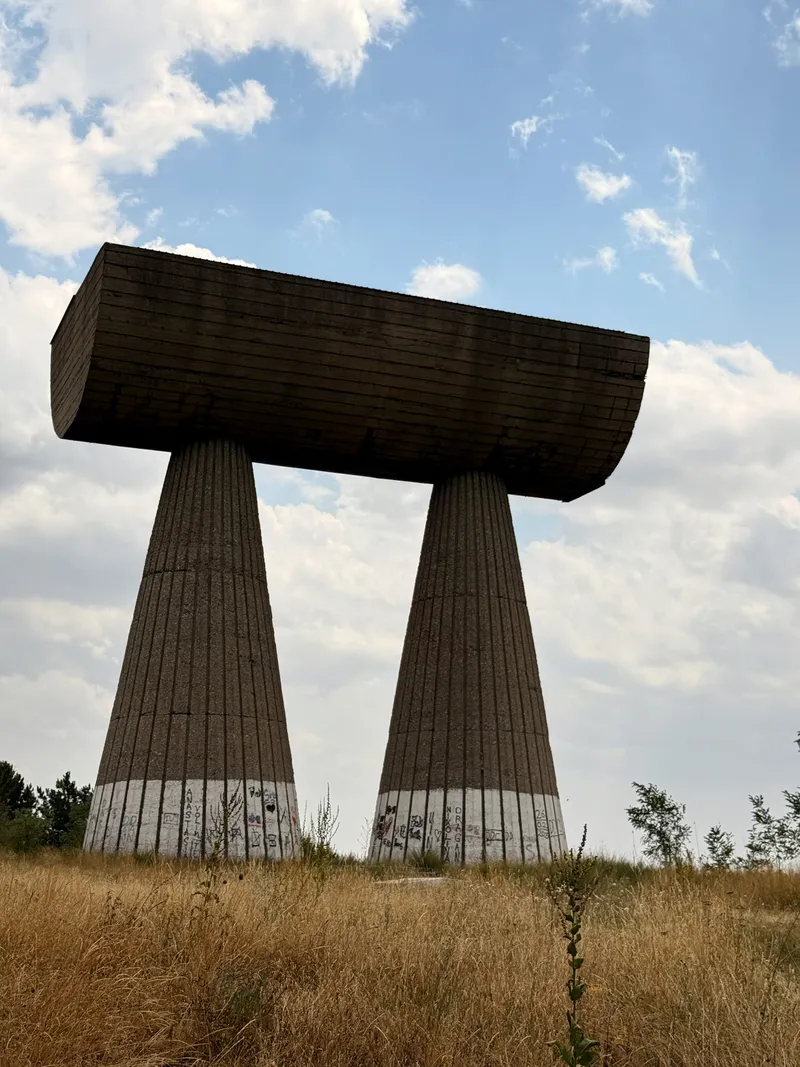
Two Pillars
A concrete mine cart carried by two legs on the hill above Mitrovica — built to say that two peoples hold up the same load, now looking down on a town divided by a river.
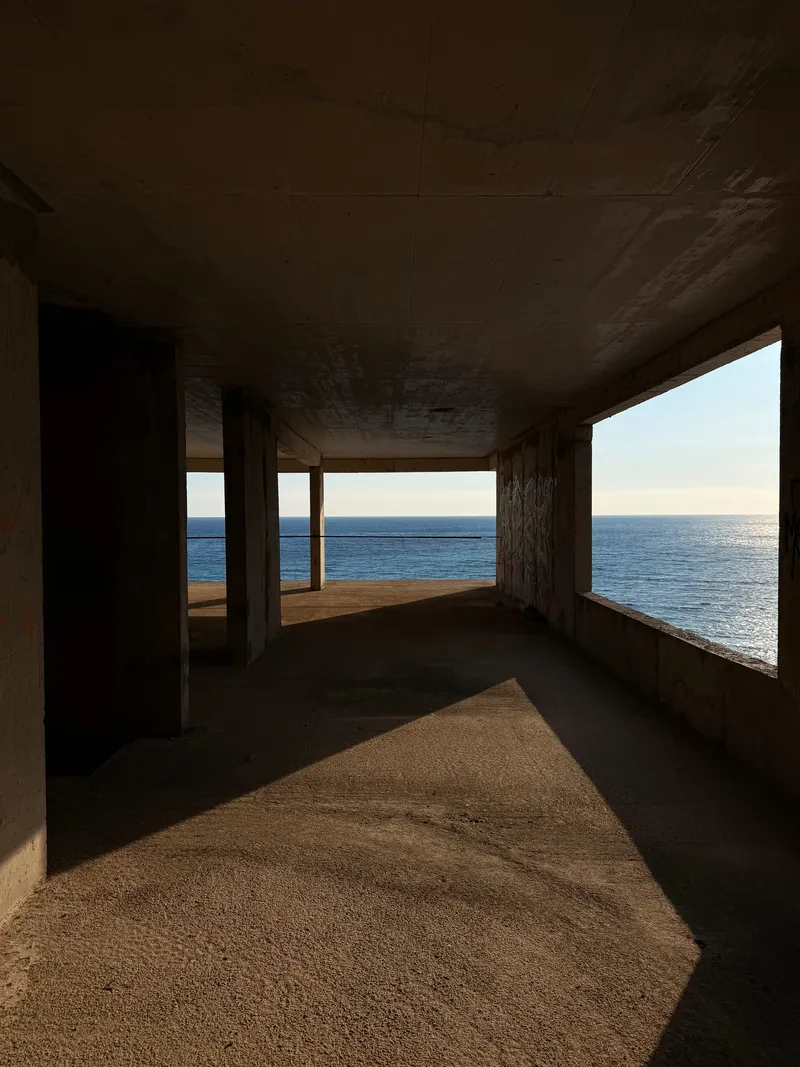
Vacancy
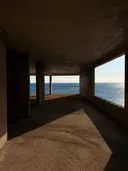
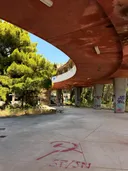
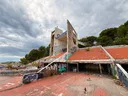
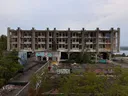
A terraced concrete resort going to salt and graffiti on the Montenegrin coast — every empty room still has the sea.
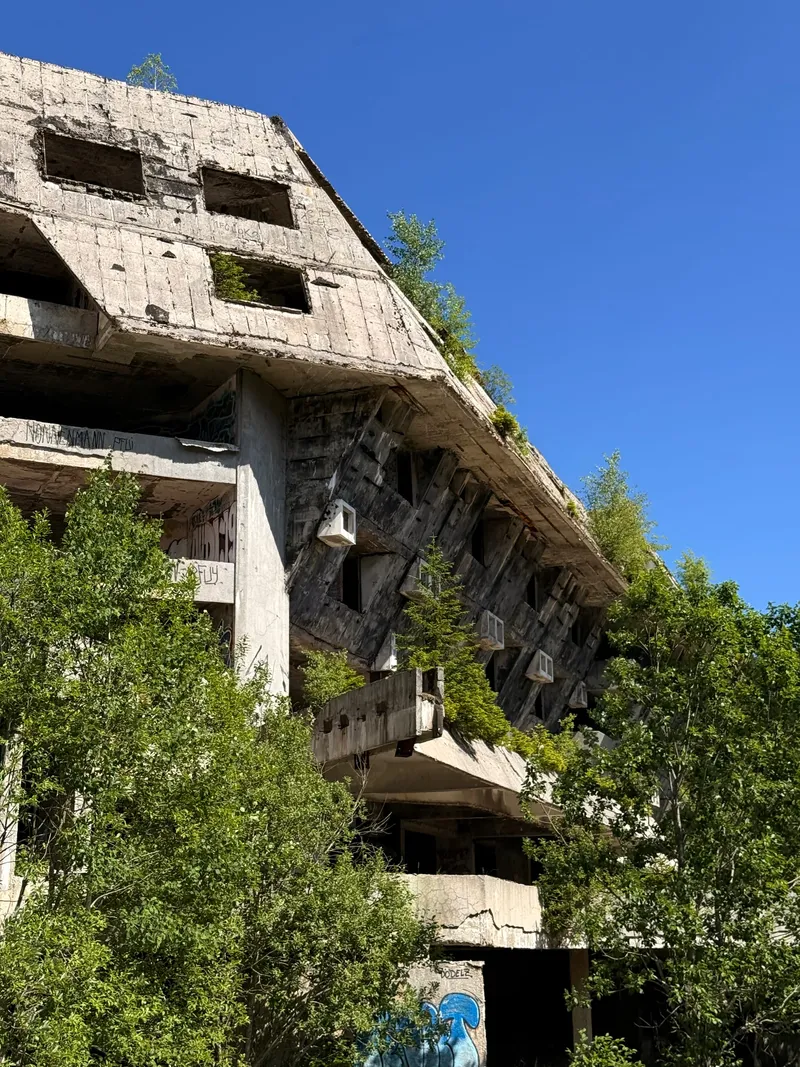
After the Games
A modernist hotel built for a mountain's brightest moment, left to the pines above Sarajevo.
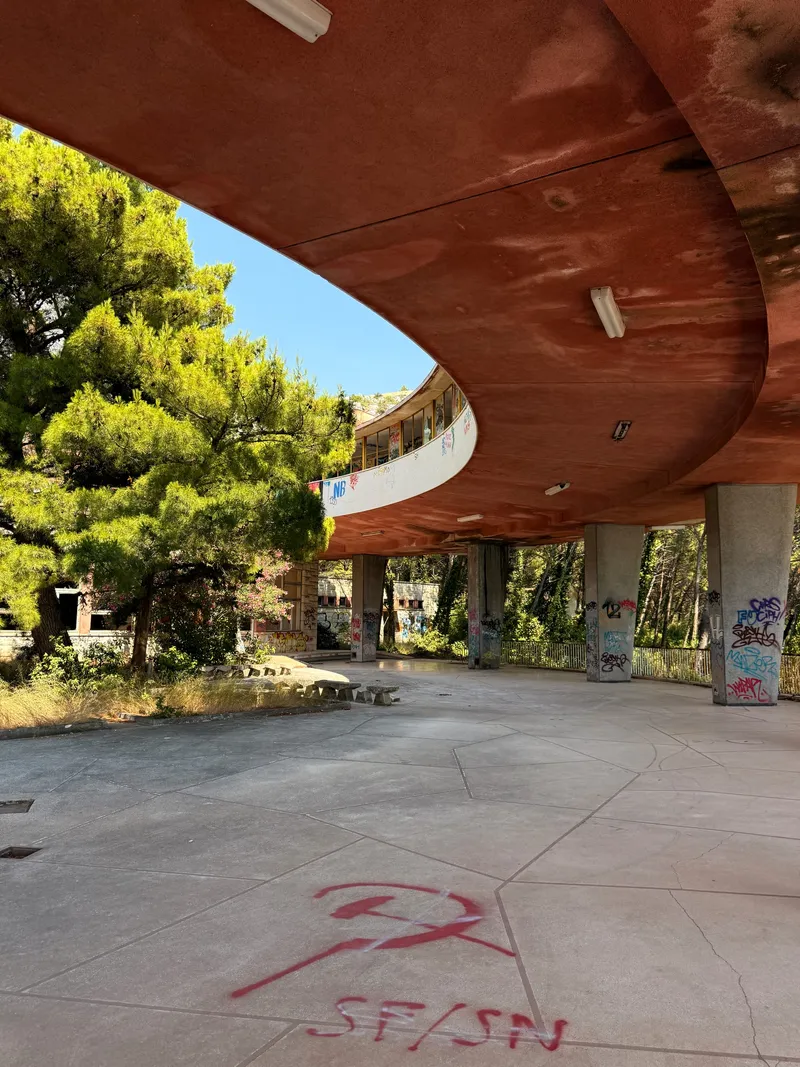
Krvavica
A circular concrete sanatorium hidden in the pines above the Adriatic — a modernist ring built for sick children, now open to the sea wind.
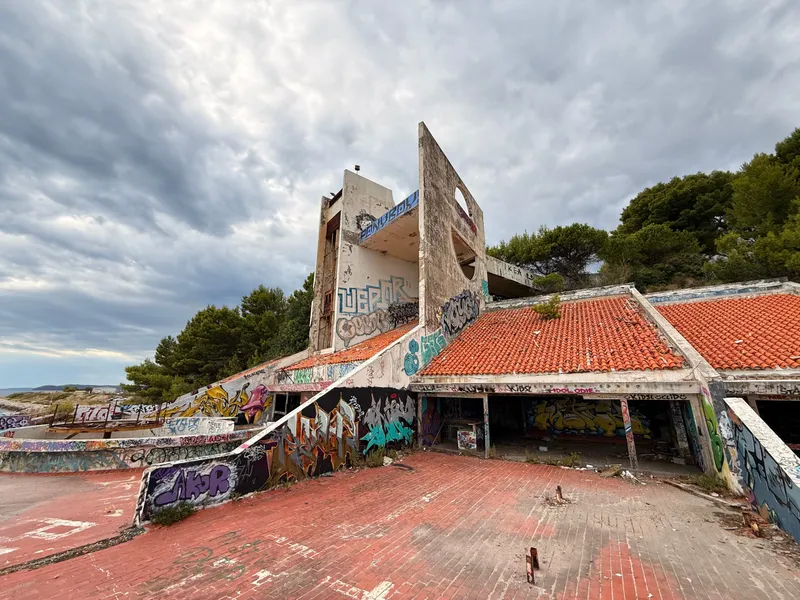
Painted Over
Three years of driving past it on the coast road east of Split before I finally stopped. Every surface has been gone over — tags over pieces over tags, years deep, not a square metre of bare concrete left at standing height. And under all of it the shape hasn't moved an inch — an Adriatic holiday hotel from a country that isn't on the signs any more.
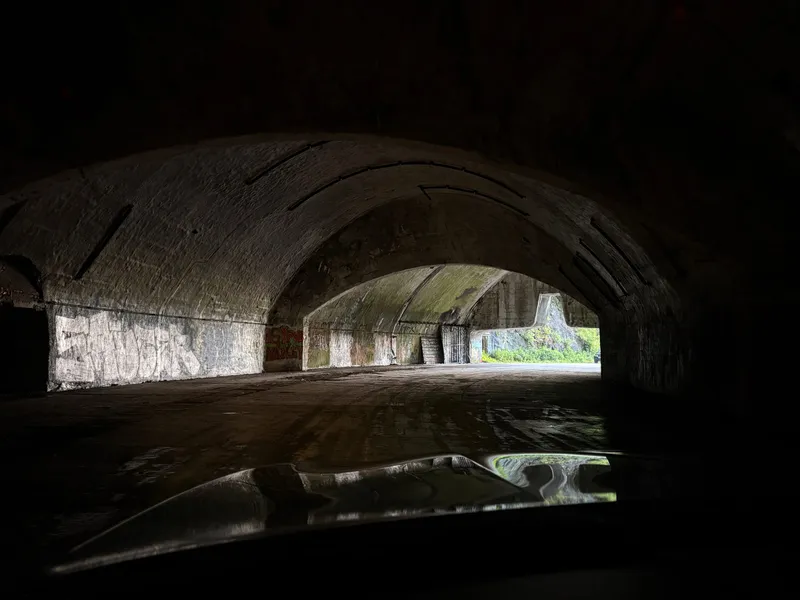
Željava
An underground Yugoslav air base bored straight into a mountain on the Bosnian border — kilometres of tunnel dug to hide jets from a nuclear war that never came.
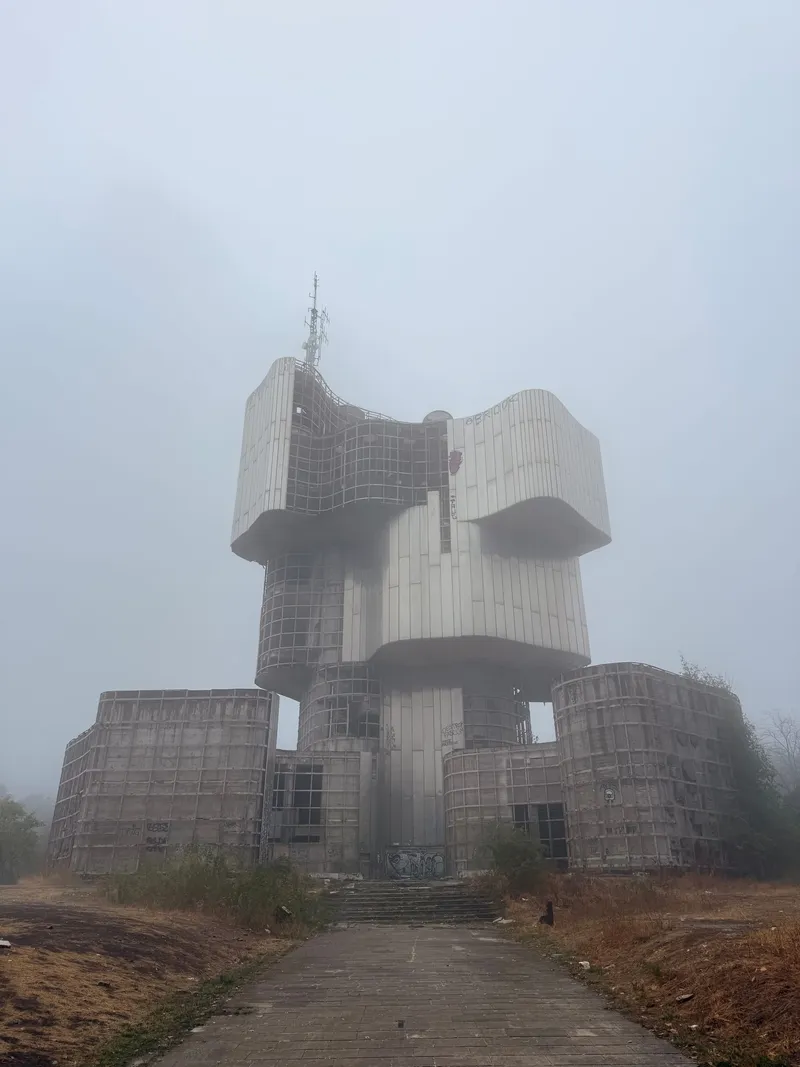
Petrova Gora
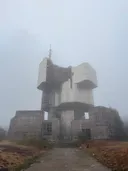
I had wanted this one for a long time and finally got there on the worst possible day for it — rain, and a fog so thick the monument barely existed until I was standing under it. It turned out to be exactly the right weather. A memorial to the 1941 uprising on a forested hilltop in Croatia, stripped back to its frame and gone soft at the edges in the cloud.
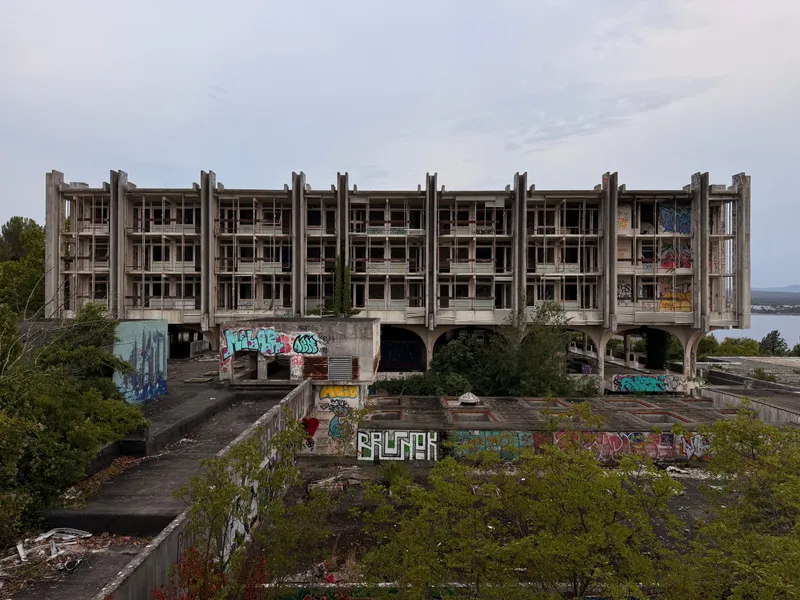
The Adriatic Club
I pulled off the motorway on the way down from northern Italy to stretch my legs for twenty minutes at a famous ruin on Krk. It ate the whole evening. A 1970s luxury resort built with Penthouse money — a casino for Western high rollers dropped into socialist Yugoslavia — and now the most comprehensively wrecked thing I have walked into. It keeps going, and going.
- Belgrade is a base
- Kosmaj early
- Churches near Kosmaj
- Avala, honestly
- Both gates, one day
- Money changes six times
- Fuel at half a tank
- Download the maps
- Split is the easy night
- Head torch, not a phone
- Leave the drone packed
- Talk to whoever turns up
- Petrova Gora in bad weather
- Fifteen days is honest
14 field notes, and the advice on 10 of the 13 legs, come with the guide. Unlock them below.